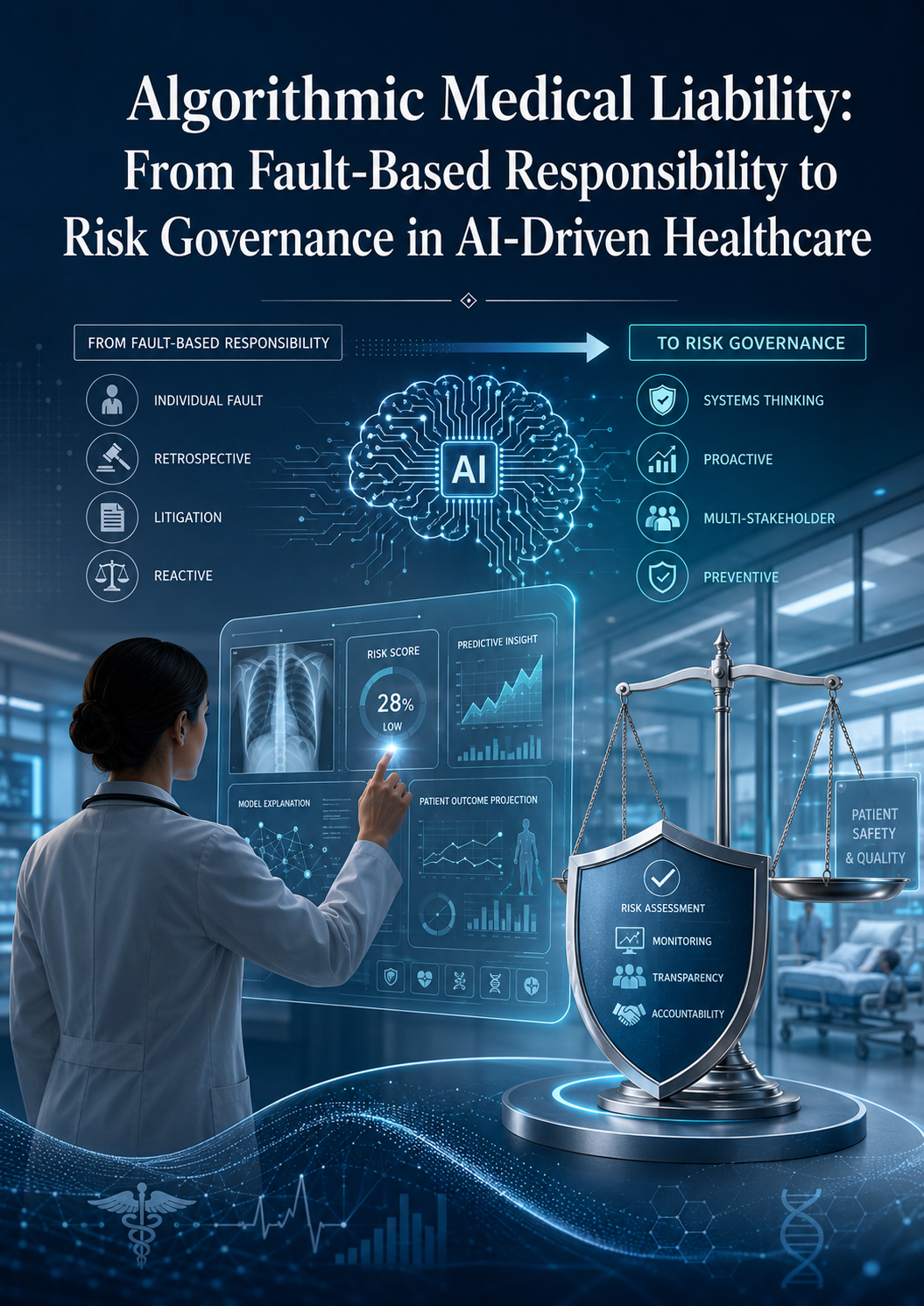
Algorithmic Medical Liability: From Fault-Based Responsibility to Risk Governance in AI-Driven Healthcare
The integration of artificial intelligence (AI) into medical decision-making raises significant challenges for traditional frameworks of civil liability. Historically grounded in an anthropocentric model based on individual fault, linear causation, and identifiable human conduct, medical liability is increasingly confronted with complex, distributed decision making processes involving both physicians and algorithmic systems.
This study adopts a doctrinal and comparative legal approach to examine how AI reshapes the core concepts of fault, causation, and imputability. It analyzes three regulatory frameworks: the European model, characterized by preventive governance and risk management (General Data Protection Regulation (GDPR) and AI Act); the American model, based on tort law, insurance mechanisms, and contractual risk allocation; and the Moroccan legal system, which remains largely anchored in classical fault-based liability without specific adaptation to algorithmic risks.
The findings suggest that AI does not eliminate traditional liability principles but exposes their limitations when applied to probabilistic and multi-actor decision-making environments. In particular, fault becomes distributed, causation more complex and probabilistic, and liability increasingly linked to organizational and technological factors.
The paper proposes a hybrid model of algorithmic medical liability combining professional vigilance, algorithmic safety, institutional responsibility, preventive regulation, and technical traceability. Rather than attributing legal personality to AI systems, the focus should be placed on structuring the human and institutional ecosystem surrounding their use.
In the Moroccan context, adapting the legal framework to these transformations appears essential to ensure legal certainty, effective patient protection, and responsible technological innovation.