Sexual Violence Against Adolescent Girls in Morocco: Ethical Challenges and Social Pressures in Forensic Medical Practice
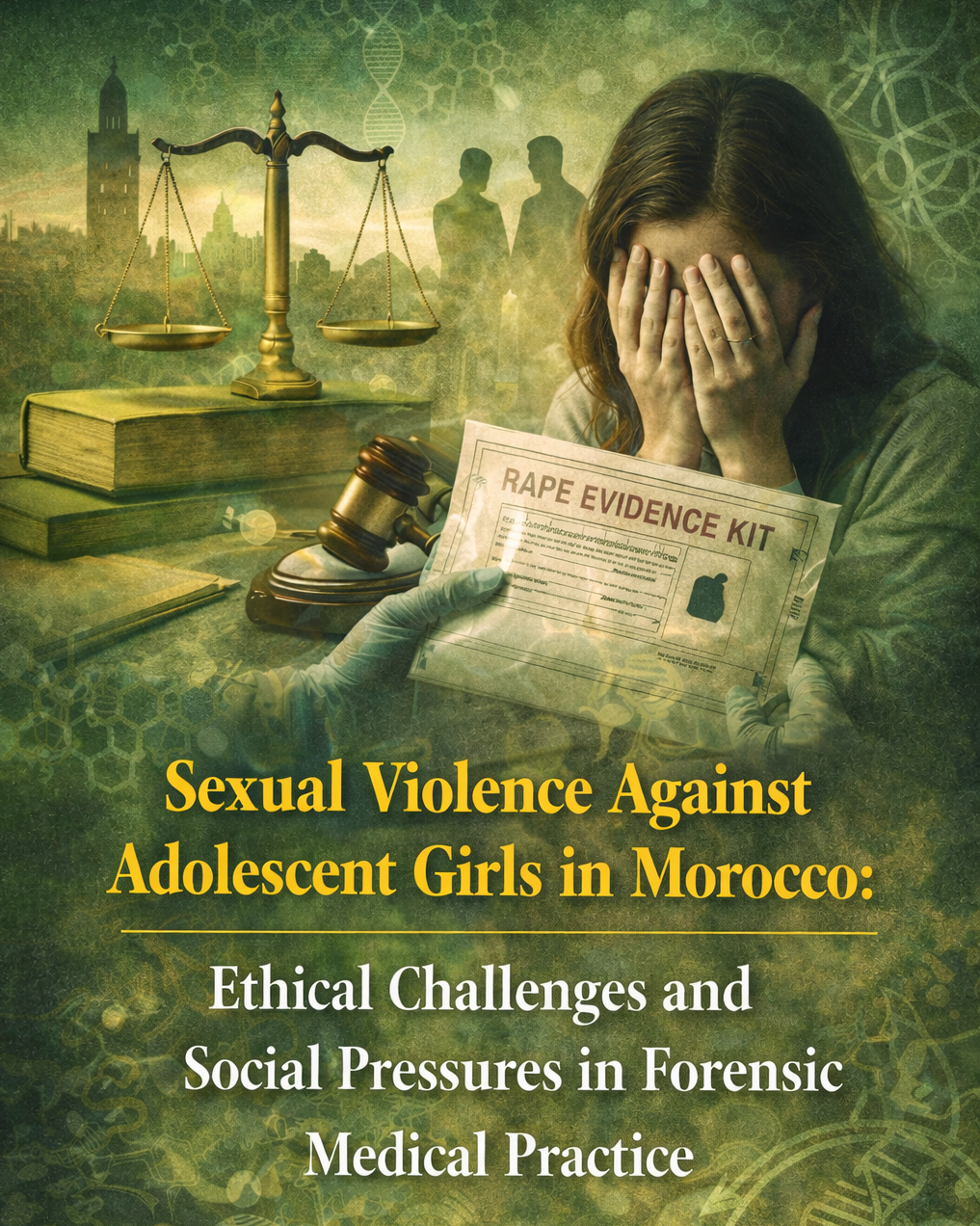

Background: In several countries, the repeal of legal provisions that previously allowed sexual offenders to avoid criminal sanctions through so-called “reparative marriage” has not fully eliminated social practices surrounding sexual violence against minors. In this context, forensic medical consultations may be solicited for purposes that extend beyond their primary evidentiary role, raising complex ethical and professional challenges for forensic practitioners.
Methods: This descriptive observational study was conducted at the Unit for Child Victims of Violence of the University Hospital of Fez (Morocco) between 2023 and 2024. It focused on female adolescents aged 14 to 18 years (n = 558), drawn from a total population of 820 minors referred for suspected sexual violence. Data were collected through standardized forensic medical records and analyzed using descriptive statistics.
Results: Most consultations were carried out following judicial requisition (approximately 80%). In a substantial proportion of cases, the consultation was sought within a judicial context in which the possibility of a so-called “reparative marriage” was mentioned. Sexual assaults involving penetration were frequently reported among adolescent girls, with genital injuries documented in more than two-thirds of examinations. Requests for virginity certification were very commonly expressed, regardless of clinical findings. Referral for psychological support was proposed in approximately two-thirds of cases.
Conclusion: These findings illustrate a persistent discrepancy between the evolution of legal frameworks and the social uses of forensic medical consultations in cases of sexual violence against adolescents. They highlight the need for an integrated institutional response combining rigorous scientific expertise, careful ethical consideration of consent—particularly in minors—and systematic access to psychological support, in order to protect victims and preserve the integrity of forensic medical practice.